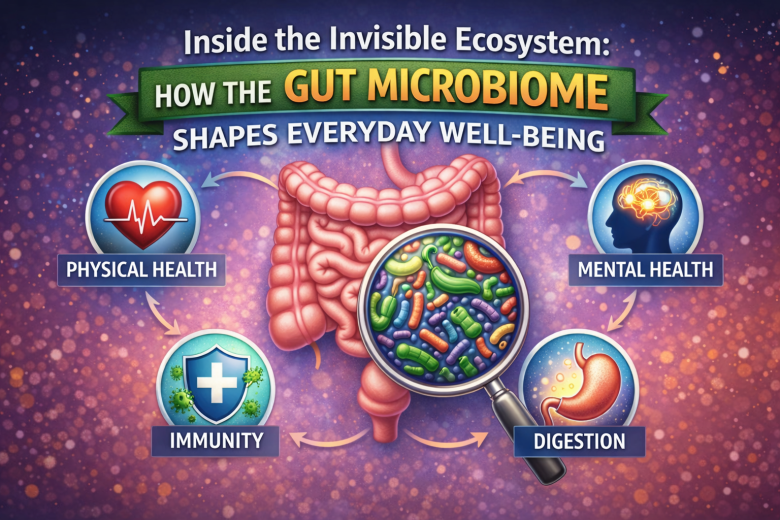
nside the Invisible Ecosystem: How the Gut Microbiome Shapes Everyday Well-Being
The human gut is home to trillions of microorganisms — bacteria, fungi, viruses, and other microscopic life forms — collectively known as the gut microbiome. Rather than being harmful intruders, many of these organisms play important roles in digestion and normal bodily functions. Modern research suggests that this internal ecosystem behaves less like a battlefield and more like a rainforest: diverse, dynamic, and highly interconnected.
The microbiome begins forming at birth and continues to develop throughout early life. Factors such as diet, environment, and daily habits appear to influence its composition. Diversity — meaning a wide range of microbial species — is often associated in research with resilience and stability. A varied microbial community may be better equipped to adapt to dietary changes and environmental stressors.
One of the best-understood roles of gut bacteria involves digestion. Certain microbes help break down dietary fiber, a type of carbohydrate the human body cannot digest on its own. In the process, they produce short-chain fatty acids — compounds that are being studied for their potential role in supporting normal intestinal function.
Scientists are also exploring how gut microbes interact with the immune system. A large portion of immune activity is connected to the gastrointestinal tract, and ongoing studies examine how microbial communities may help maintain immune balance. It is important to emphasize that research in this field is still evolving. While correlations are frequently observed, cause-and-effect relationships are often complex.
Rather than focusing on single “good” or “bad” bacteria, current scientific thinking highlights balance and diversity. The microbiome is not static. It responds to long-term patterns of diet, lifestyle, and environmental exposure. Everyday habits such as consuming plant-based foods, staying physically active, and managing stress may influence this ecosystem over time.
Understanding the gut microbiome is less about quick fixes and more about appreciating a sophisticated biological partnership — one that functions quietly but continuously in support of normal physiological processes.